The Most Profitable Spaces are Free to Build
Before a foundation is poured or a roofline is drawn, the site has already told you most of what you need to know. Where the light moves through the day. Where the wind cuts across an opening in the trees. Where the meadow dips into a quiet pocket of privacy. Good rural development starts with reading those cues. The work is less about imposing a form on a parcel and more about finding the project the land is already set up to host. Treat the land as the primary material and you get access to the most overlooked advantage in rural development. The highest returning space on the property is usually the cheapest space on the property.
DAte

The cost asymmetry
Conditioned square footage is expensive for reasons that have nothing to do with the experience of being in it. Foundation. Envelope. Insulation. Mechanicals. Code review, inspection, and the schedule those things impose.
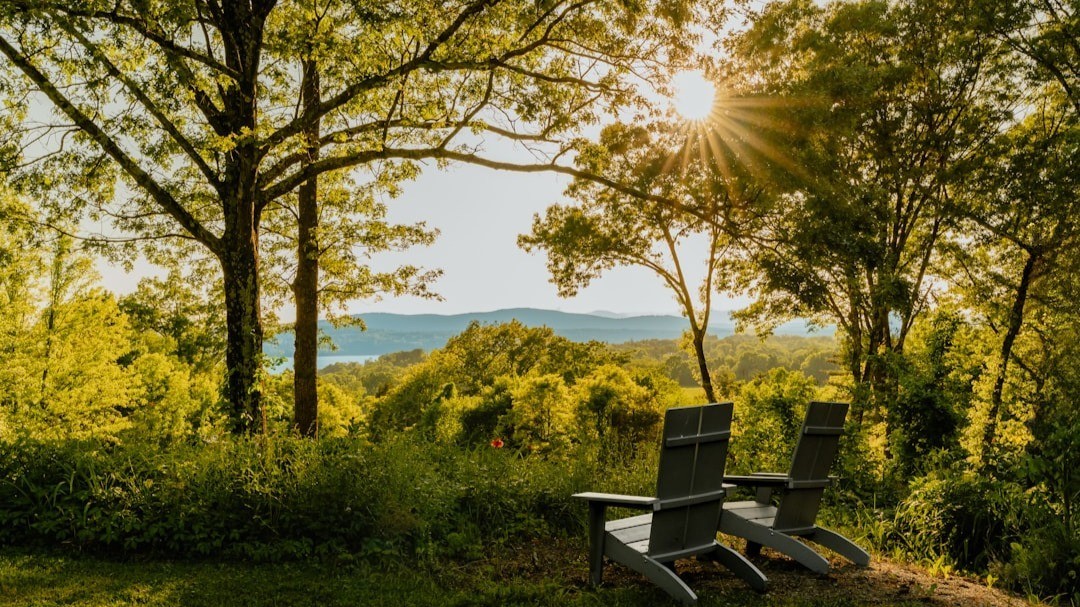
An outdoor room skips nearly all of it. A landing carved into a slope. A bathing deck set in tall grasses. A knoll with two chairs and a fire pit. A hammock grove along the tree line. A path with a reveal at the end of it. These are framing, decking, and site work, and some of them are only site work.
They are not free. Nothing on a rural site is free once you count grading, drainage, and the labor to get materials there. But the spread against conditioned space is wide enough that it changes what you should build. A well-placed outdoor room can do the work of an additional structure at a fraction of the cost of one.
What guests actually price
Nightly rate and length of stay respond to atmosphere, not floor area. Two properties with identical square footage and identical finishes will not perform identically if one has a place to sit at dusk and the other does not.
Look at what sells a listing. It is rarely an interior photograph. It is the deck, the view, the fire, the water. Guests remember the atmosphere, not the square footage, and they book on it.
It phases well
Letting the landscape drive the layout makes sequencing easier and cheaper.
A sauna can come in year three, sited where the morning sun hits first, without touching the main structure. A cluster of small units can follow natural clearings instead of engineered pads. Circulation gets simpler because the topography has already suggested where people will walk.
Each of those is a small, self-contained capital decision. You can make them as revenue supports them rather than committing at the outset.
The honest limitation
Outdoor space does not add appraised square footage.
That matters depending on the exit. If the asset is underwritten on revenue, outdoor rooms are close to the best dollar you can spend. If it will be sold on comps, an appraiser will not give you credit for a bathing deck, and the gap between what the property is worth to use and what it appraises for can be real.
Seasonality is the other one. In a climate with a hard winter, outdoor space carries the year unevenly. Structures that extend the shoulder season, a covered porch, a fire feature, a sauna, are worth more than their cost suggests for exactly this reason.
The point
The site narrows the options before you start, and usually to the ones that feel inevitable. Design with the landscape rather than against it and you get a property that feels effortless and intentional, with construction costs where they should be.
The cheapest line item on the project is often the one people remember.
Author